
HUMAN CENTRED TECHNOLOGY PT 1
The rapid pace of technological advancements has led us to a pivotal moment where we must reflect on the true purpose and impact of innovation. We find ourselves at a crossroads, questioning whether our pursuit of the latest tech trends genuinely empowers society or merely fuels an endless race for the next breakthrough.
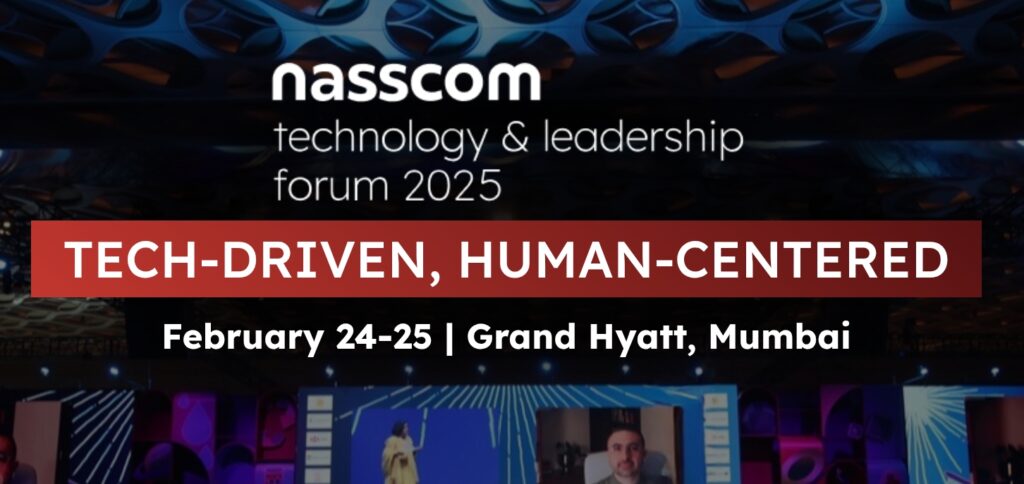
During the 33rd edition of the Nasscom Technology and Leadership Forum (NTLF), this thoughtful perspective was brought to the forefront. The event showcased how technology can be a catalyst for positive change when it is driven by the desire to improve the human experience. As we navigate the fast-paced world of innovation, this serves as a reminder to maintain our focus on developing solutions that are tech-driven yet centered around the needs and values of the people they are meant to serve.
It is crucial that we refocus our efforts on placing human experiences at the center of technological progress. By embracing a human-centered approach to innovation, we can drive meaningful change and create a better future for all. This requires a delicate balance, where technology serves as a powerful tool that enhances our lives without compromising our values and well-being.
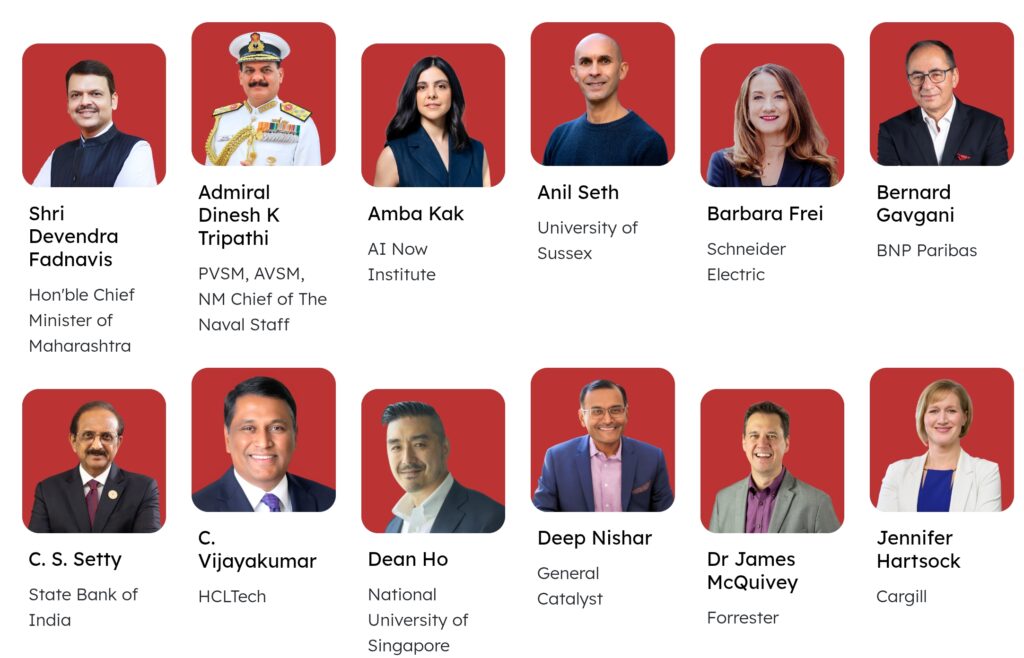
The 33rd edition of the Nasscom Technology Leadership Forum (NTLF) 2025 served as a dynamic platform that facilitated valuable networking opportunities for industry experts, policymakers, academicians, startup founders, and thought leaders. This esteemed event brought together individuals from diverse backgrounds and sectors, fostering an exchange of ideas and sparking engaging discussions on the latest trends and innovations in technology.
The Nasscom Technology & Leadership Forum 2025 proved to be an impactful event, providing invaluable insights into the ever-evolving landscape of technology. Across 36 engaging sessions, prominent figures from various industries, including leaders, innovators, and policymakers, shared their expertise and discussed pressing topics such as AI, quantum computing, cybersecurity, and leadership in the digital era.
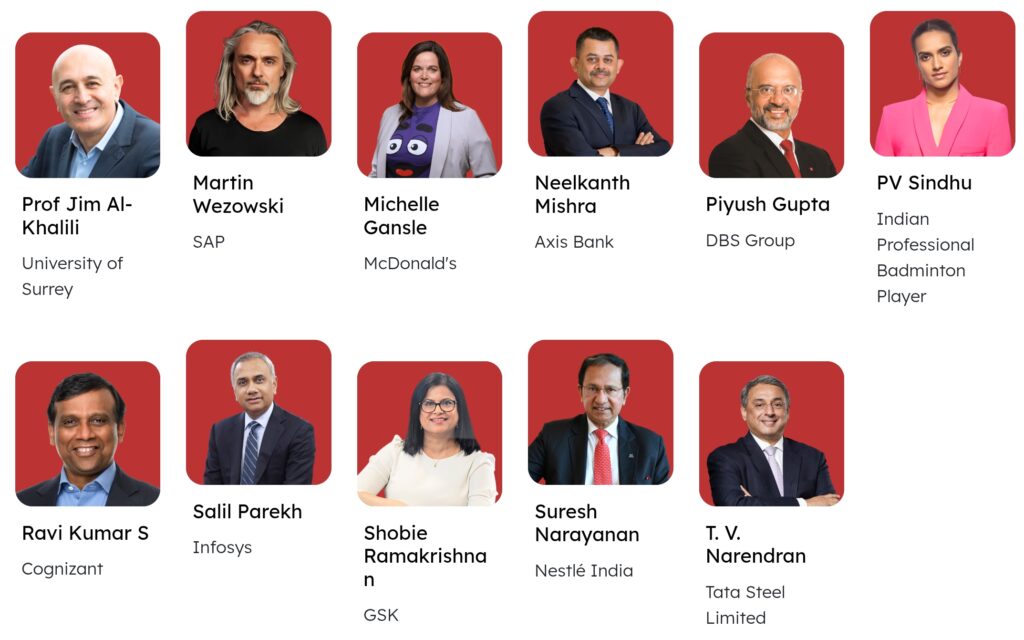
By connecting key players in the technology landscape, NTLF 2025 promoted collaboration and the sharing of insights, enabled participants to gain a deeper understanding of the ever-evolving world of technology. This gathering of brilliant minds not only contributed to the growth and development of the industry but also paved the way for new partnerships and opportunities that will shape the future of technology for years to come.
In this distinguished gathering, networking transcended the realm of mere professional interaction and emerged as a critical component of success. The relationships forged between delegates served as catalysts for innovation, fostering meaningful connections that crossed borders and industries. This melting pot of diverse perspectives, ideas, and expertise allowed for valuable conversations, knowledge-sharing, and the opportunity to collectively drive impactful change in the ever-evolving landscape of technology.
The forum encouraged attendees to reimagine the role of technology in society, emphasizing the need for it to serve humanity and contribute to the greater good.
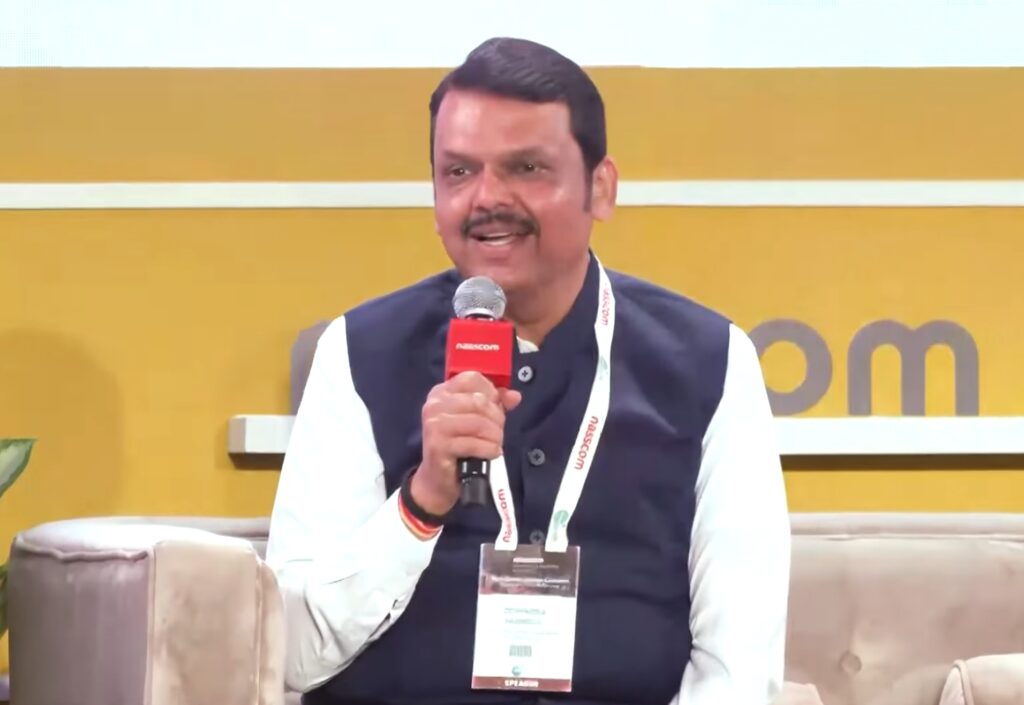
Chief Minister Devendra Fadnavis’ announcement at the Nasscom Technology & Leadership Forum represents a transformative initiative that could reshape India’s innovation landscape. Maharashtra is positioning itself as India’s technology and AI capital through an ambitious 300-acre innovation city in Navi Mumbai, marking a significant shift in the state’s economic strategy.
The insights shared at NTLF 2025 revealed Maharashtra’s comprehensive strategy to transform from a manufacturing and financial hub to a global technology powerhouse. The convergence of the innovation city project, AI policy framework, data center infrastructure, and skilled workforce development creates a unique ecosystem positioning Maharashtra to lead India’s technological advancement in the AI era.
Strategic Economic Vision
Trillion-Dollar Economy Target: Maharashtra is aggressively pursuing its goal to become India’s first $1 trillion sub-national economy by 2028. The state has already crossed the $500 billion mark and is targeting a 17.55% GSDP growth rate to achieve this milestone. This ambitious target is supported by a 10% compound annual growth rate sustained over the last seven years.
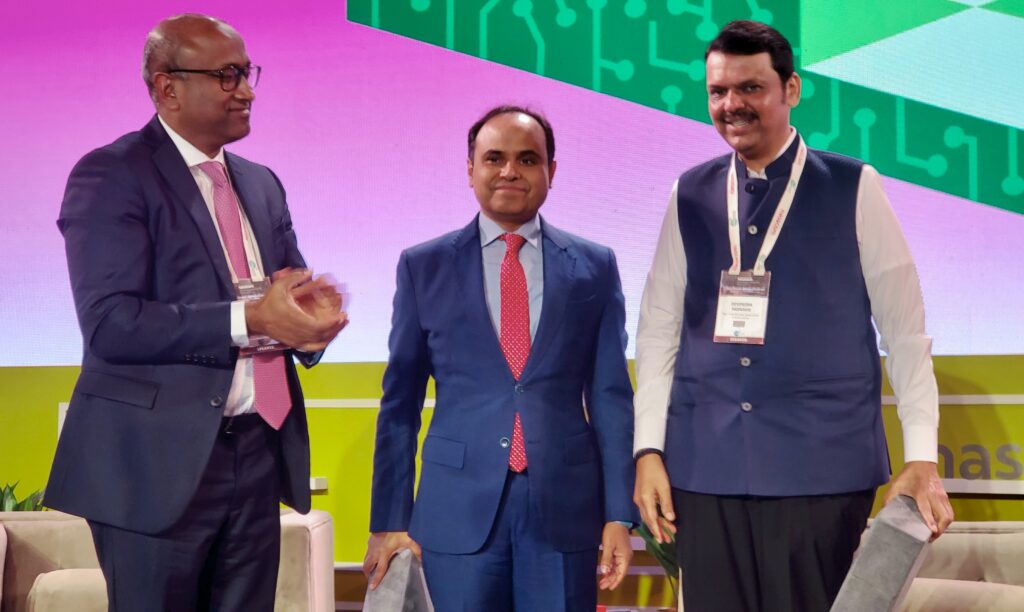
Leadership Structure: N. Chandrasekaran, Chairman of Tata Sons, leads the government advisory council and has volunteered to create the framework for the innovation city. This high-profile involvement demonstrates the project’s strategic importance and private sector commitment.
Innovation City: A Futuristic HubScale and Scope: Fadnavis announced the establishment of a comprehensive 300-acre innovation city in Navi Mumbai, positioning it as a global technology hub. The proposed innovation city will be three times the size of Mumbai and function as a “thematic city” designed to accommodate comprehensive business needs. The project aims to host “everything and anything in terms of technology, innovation and AI”.
Strategic Location: Located near the upcoming Navi Mumbai International Airport, the innovation city is positioned to complement existing infrastructure investments and create a comprehensive technology ecosystem.
Investment Attraction: At the World Economic Forum in Davos, Maharashtra secured $180 billion worth of MoUs, demonstrating unprecedented international interest in the state’s development plans.
AI Leadership and Policy Framework
AI Capital Ambition: When asked directly if Maharashtra would like to be the AI capital of India, CM Fadnavis confidently agreed, outlining concrete steps to achieve this vision.
AI-Powered Governance: The government has already implemented AI-powered tools for administrative efficiency, including systems that condense large files into single-page summaries, enabling bureaucrats to make faster, more informed decisions.
Policy Development: A 16-member committee comprising business leaders and AI experts is developing Maharashtra’s comprehensive AI policy, with terms of reference specifically designed to make Maharashtra the leader in AI adoption.
Infrastructure and Digital Ecosystem
Data Center Dominance
Market Leadership: The region around Navi Mumbai accounts for 60% of India’s data center capacity, establishing Maharashtra as the country’s digital infrastructure backbone.
Investment Scale: The state secured $20 billion worth of data center investments at Davos, reinforcing its position as India’s data center hub.
Future Infrastructure: Plans include establishing a dedicated data center park in Navi Mumbai to accommodate the growing demand for digital infrastructure.
Global Capability Centers (GCC) Strategy
Comprehensive Network: Maharashtra is establishing GCC ecosystems across five cities: Mumbai, Pune, Nagpur, Sambhajinagar (Aurangabad), and Nashik.
Active Development: The state is in “active talks” with four to five major GCCs and is creating a dedicated GCC park in Navi Mumbai.
Technology Adoption and Innovation
Government Digital Transformation
Digital Service Delivery: Nearly all government services have been digitized under the Right to Service Act, enabling citizens to access services end-to-end digitally without visiting government offices.
Early AI Adoption: Maharashtra was among the first states to establish an AI Center at Mumbai University in 2018, launched by Prime Minister Narendra Modi, and created a Center of Excellence in Industry 4.0 with the World Economic Forum.
Following NTLF 2025, Maharashtra announced Mumbai Tech Week 2025 as “Asia’s Largest AI Festival,” positioning Mumbai as “The AI Sandbox of Asia”. The event, organized in collaboration with the Tech Entrepreneurs Association of Mumbai (TEAM), represents a $60 billion combined valuation ecosystem with over 10,000 community members.
Leadership Philosophy
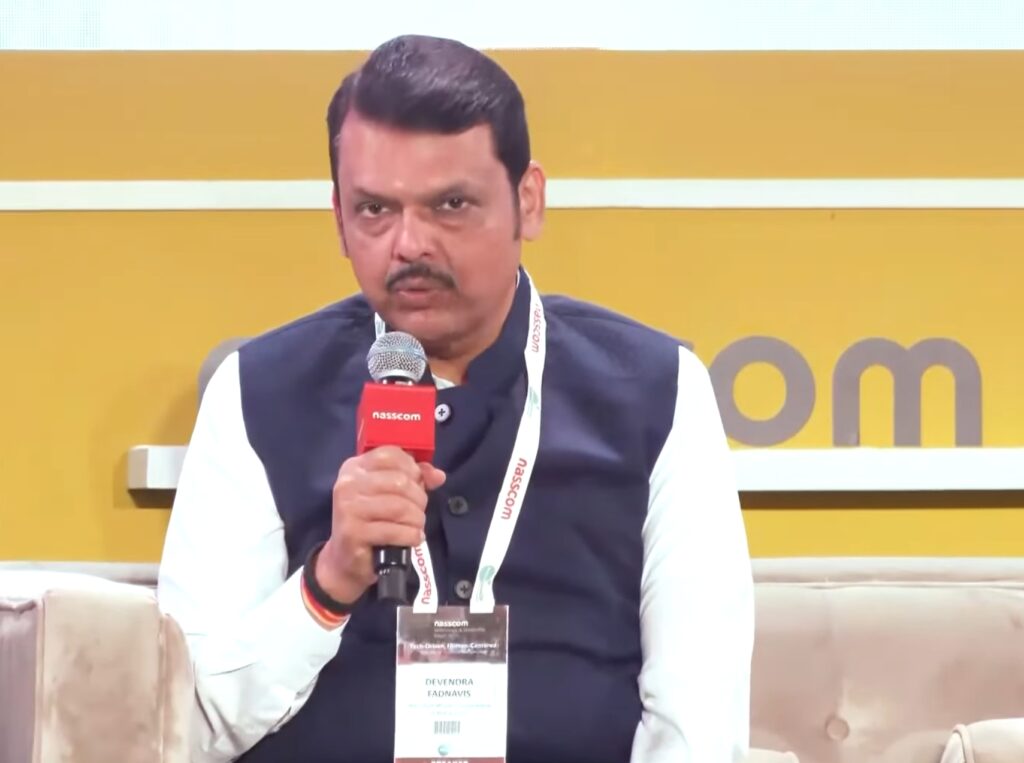
Technology as Equalizer: CM Fadnavis emphasized that “technology levels the playing field and amplifies citizen welfare like never before,” viewing digital governance as a tool for equitable development.
Human-Centric Approach: Aligning with NTLF’s theme, Maharashtra’s technology adoption focuses on enhancing human experiences rather than replacing human involvement.
Strategic Positioning
Global Competitiveness: The presentation positioned Maharashtra not just as India’s financial capital but as its emerging technology and AI capital, capable of leading India’s digital transformation.
Investment Magnet: The comprehensive vision presented at NTLF 2025 demonstrated Maharashtra’s readiness to attract global technology companies and investments through policy support, infrastructure development, and skilled workforce availability.
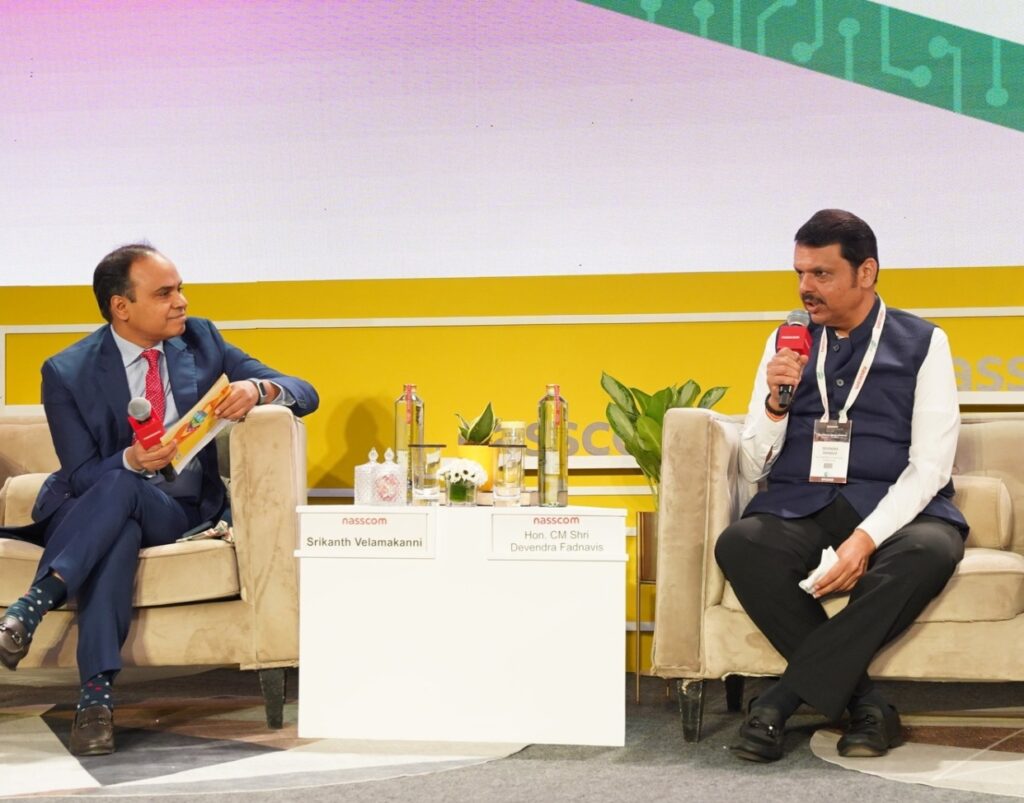
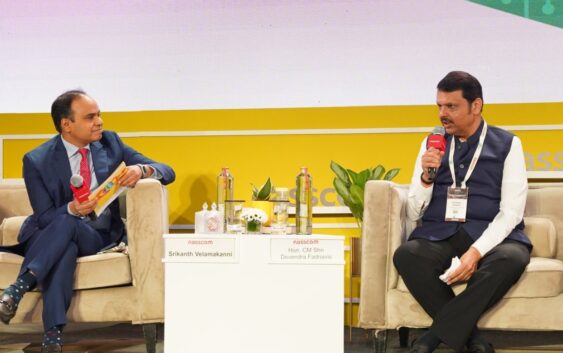
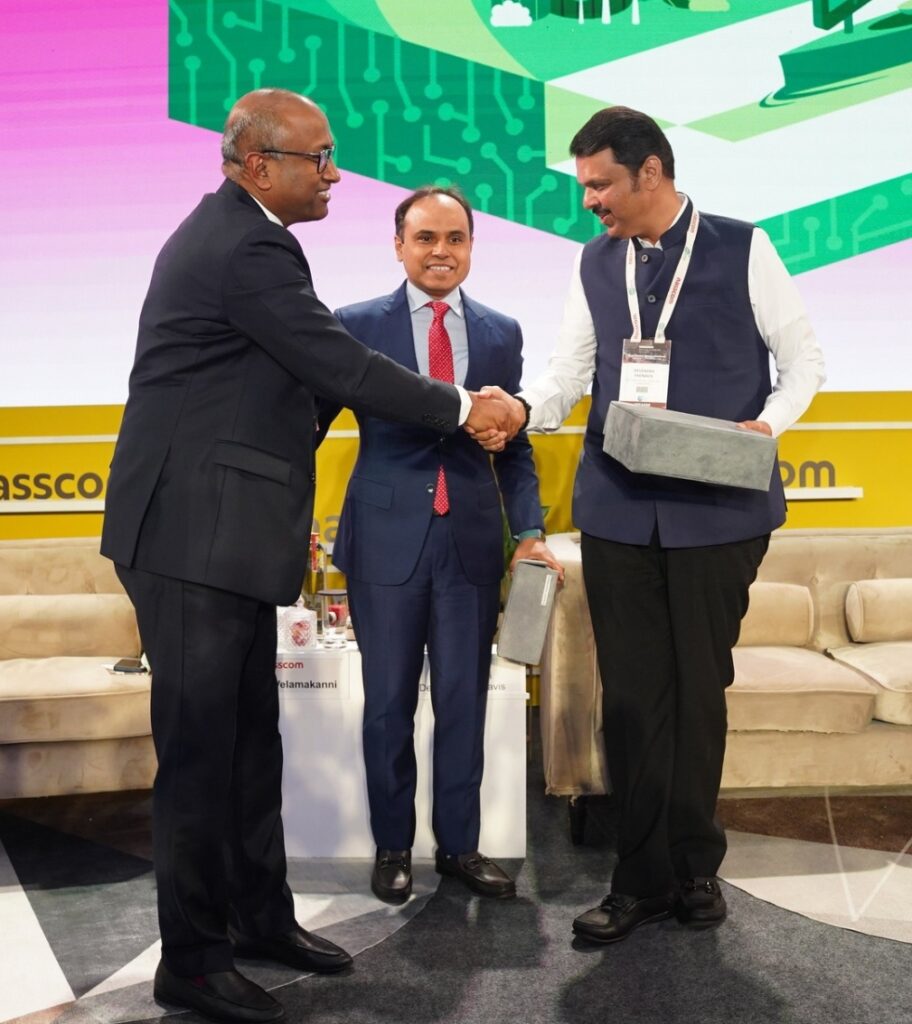
During a fireside chat with Fractal CEO Srikanth Velamakanni at the Nasscom Technology and Leadership Forum (NTLF), Devendra Fadnavis, the Honorable Chief Minister of Maharashtra, shared his ambitious plans to establish Maharashtra as India’s foremost AI hub.
He proudly announced that Maharashtra is already a key player in India’s data centre infrastructure, hosting 60% of the country’s overall data centre capacity. Moreover, the state recently secured a $20 billion investment at the World Economic Forum, further solidifying its commitment to AI and data centre development.
In pursuit of these goals, Fadnavis highlighted the Maharashtra AI Mission, which aims to develop a comprehensive AI policy through a committee of industry experts. Additionally, the state is empowering women by providing AI training to 10,000 individuals.
Fadnavis also emphasized Maharashtra’s dedication to establishing Global Capability Centers in major cities and the development of a 300-acre innovation city. These initiatives will foster technological advancements and help Maharashtra achieve its goal of becoming India’s first trillion-dollar subnational economy.
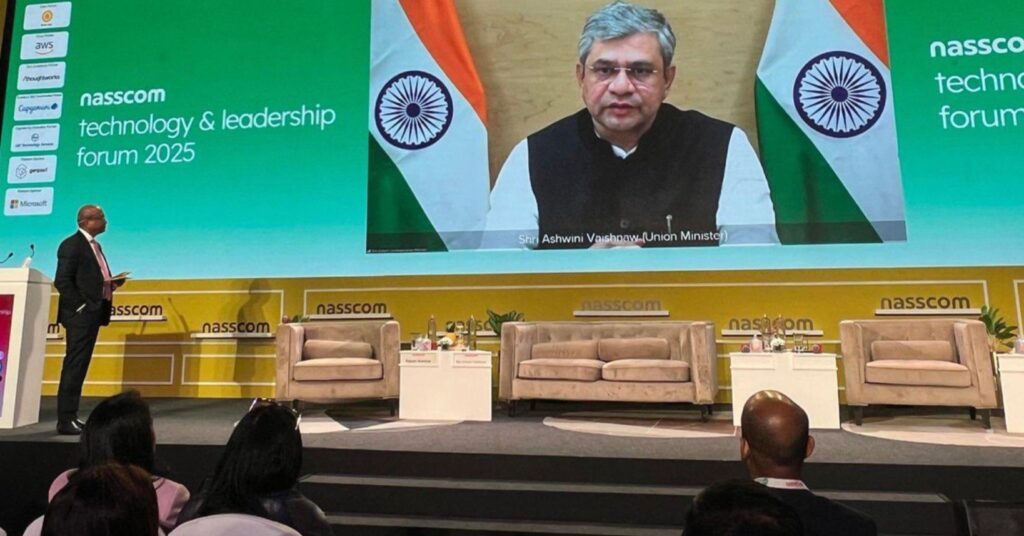
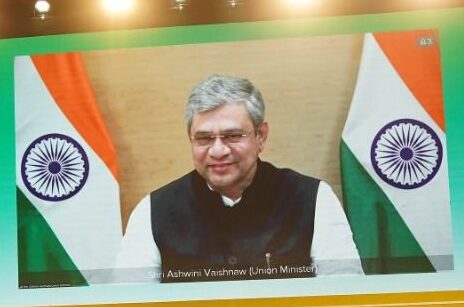
At the session of NASSCOM Technology and Leadership Forum 2025, Shri Ashwini Vaishnaw delivered a powerful address on India’s AI transformation and digital sovereignty. His central message was clear: “India is writing its own digital destiny” through a comprehensive approach that combines technological innovation with regulatory frameworks. India is taking a proactive approach by establishing centers of excellence and implementing techno-legal frameworks. These initiatives aim to address security concerns and foster an environment where innovation can flourish. Shri Ashwini Vaishnaw stressed the importance of striking a balance between innovation and regulation, stating, “It should be a law that balances innovation and regulation.”
Vaishnaw’s presentation at NTLF 2025 positioned India not just as a participant in the global AI race, but as a potential leader with a unique approach combining technological innovation, regulatory wisdom, and inclusive development. His emphasis on the 100x multiplication effect of AI-enhanced DPI, combined with India’s strategy of developing indigenous models while maintaining openness to global innovations, presents a balanced path toward technological sovereignty.
The minister’s confidence in India’s ability to develop world-class AI models within 4-8 months and his emphasis on the techno-legal approach to regulation demonstrate India’s commitment to leading rather than following in the AI revolution, making NTLF 2025 a significant platform for articulating India’s digital ambitions.
Digital Public Infrastructure as AI Multiplier
AI-Powered DPI Enhancement
Exponential Value Creation: Vaishnaw emphasized that the integration of AI with India’s Digital Public Infrastructure (DPI) could multiply its power by 10x, 20x, or even 100x. This represents a paradigm shift where existing infrastructure becomes exponentially more powerful through AI integration.
Practical Implementation: The government has already begun implementing AI tools alongside DPI systems. Aadhaar-based face authentication now supports over 15 crore monthly transactions, demonstrating the practical application of AI-enhanced identity verification.
Global Recognition: The minister highlighted that Japan has granted a patent to India’s Unified Payments Interface (UPI), showcasing international recognition of India’s digital innovation.
India’s AI Independence Strategy
Indigenous AI Models Development
Large Language Model Initiative: Vaishnaw announced that the application process for a government-promoted scheme to create India’s own large language model has already started. The minister expressed confidence in India’s startups to develop their own foundational models tailored to Indian needs.
DeepSeek Inspiration: Drawing parallels with China’s DeepSeek model, which was developed for approximately $5.5 million, Vaishnaw argued that if China can create such a model, India—with its proven track record of frugal innovation (citing the moon mission as an example)—can certainly develop similar models at low cost.
Computing Infrastructure: India has secured 18,693 GPUs, including 12,896 Nvidia H100s and 1,480 H200s, providing substantial computing power for AI model development. This capacity exceeds the 2,000 GPUs used to train DeepSeek and approaches the 25,000 GPUs used for ChatGPT.
Transformation from Services to Products
Strategic Economic Shift
Product Nation Vision: Vaishnaw outlined India’s aspiration to shift from being a services-led country to a product-driven nation. This transformation involves owning intellectual property and designing indigenous products rather than merely providing services.
Semiconductor Development: As part of this vision, the government has launched a product development challenge for entrepreneurs to utilize locally manufactured chipsets. The minister announced that India will roll out its first Made-in-India chip in 2025.
25 Strategic Chipsets: India has shortlisted approximately 25 chipsets ranging from very small value, high-volume products to high-value, low-volume products, covering the entire spectrum of semiconductor needs.
Industry-Led Curriculum
100x Scaling Challenge: Vaishnaw exhorted NASSCOM to expand its skilling initiative “by 100 times”, giving industry autonomy to set curriculum for students. This ensures that graduates receive job-ready training rather than requiring extensive post-education training.
Successful Models: The minister cited successful experiments by Airbus and Deutsche Bank in industry-led skill development, demonstrating the viability of this approach.
AI Infrastructure and Democratization
Compute Facility Development
Common Computing Infrastructure: The government is creating a common compute facility to democratize access to AI resources, ensuring that students, startups, and researchers can access high-end computing power.
Foundational Models: India is developing its own foundational models specifically designed for Indian contexts, languages, and cultural nuances, removing biases that might exist in foreign-developed models.
Global Competitiveness and Innovation
Talent and Research Excellence
Stanford Recognition: India is already ranked number one globally by Stanford University in AI talent, providing a strong foundation for technological advancement.
Research Pipeline: The government is creating a robust talent pipeline through academic programs and research initiatives, strengthening India’s position in global AI competition.
Startup Ecosystem: With over 1.8 lakh startups, 89% of which launched with AI-powered offerings, India demonstrates significant entrepreneurial momentum in AI.
Vaishnaw expressed confidence that India will be “among the top five countries in the world” in AI technology, semiconductor technology, and telecom technology within the next five years. The overarching theme of India “writing its own digital destiny” reflects a comprehensive approach to technological sovereignty while remaining open to global collaboration and innovation.
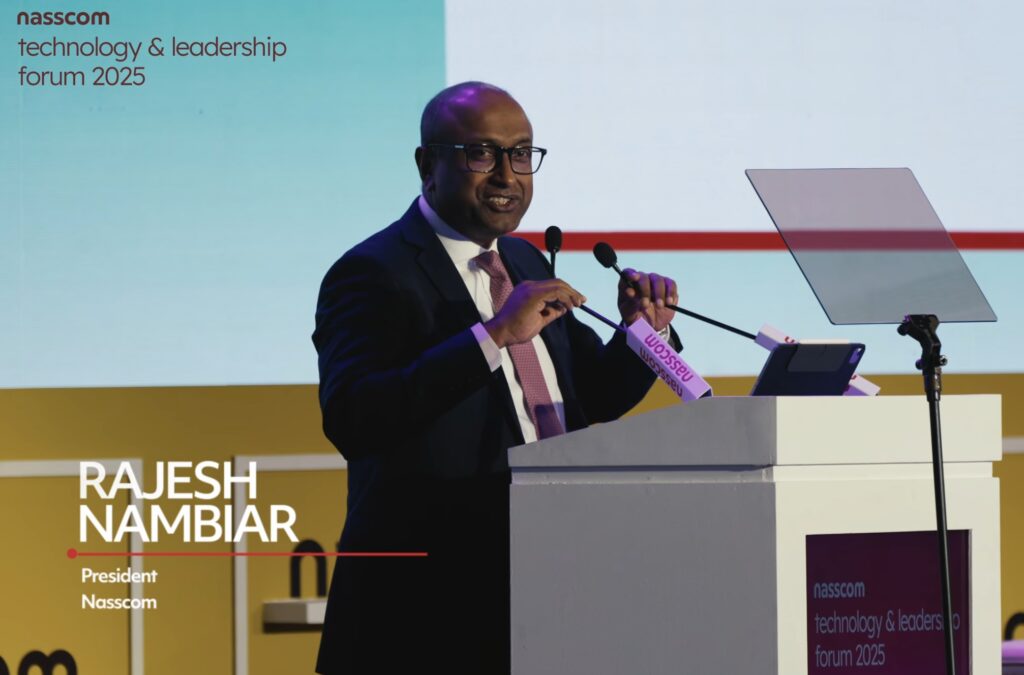
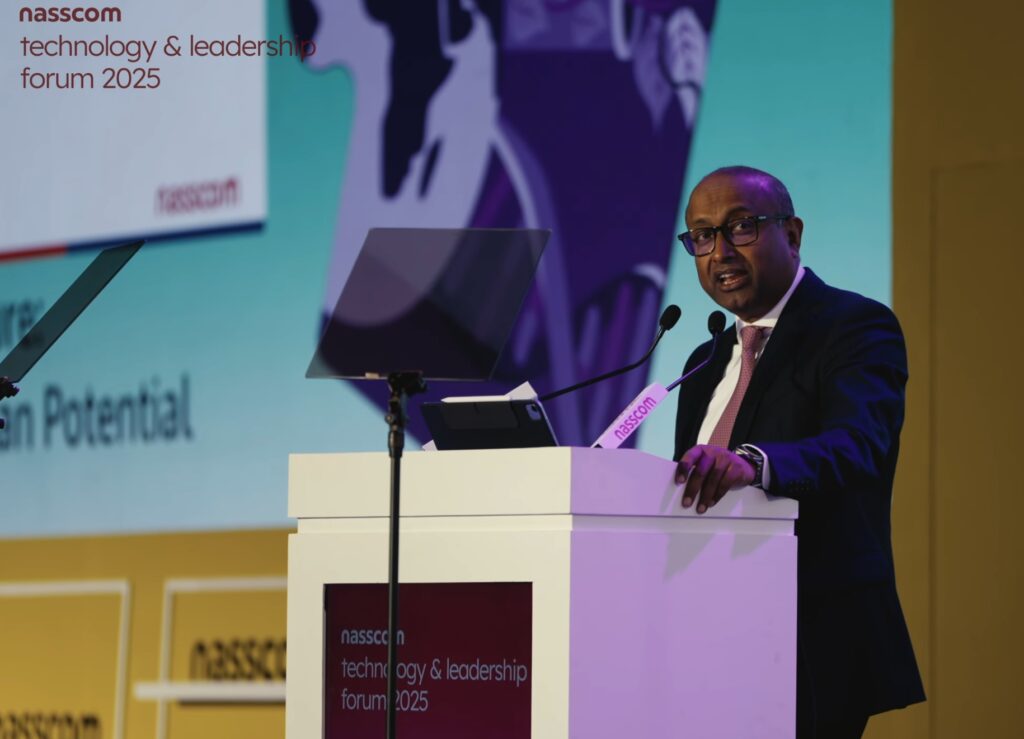
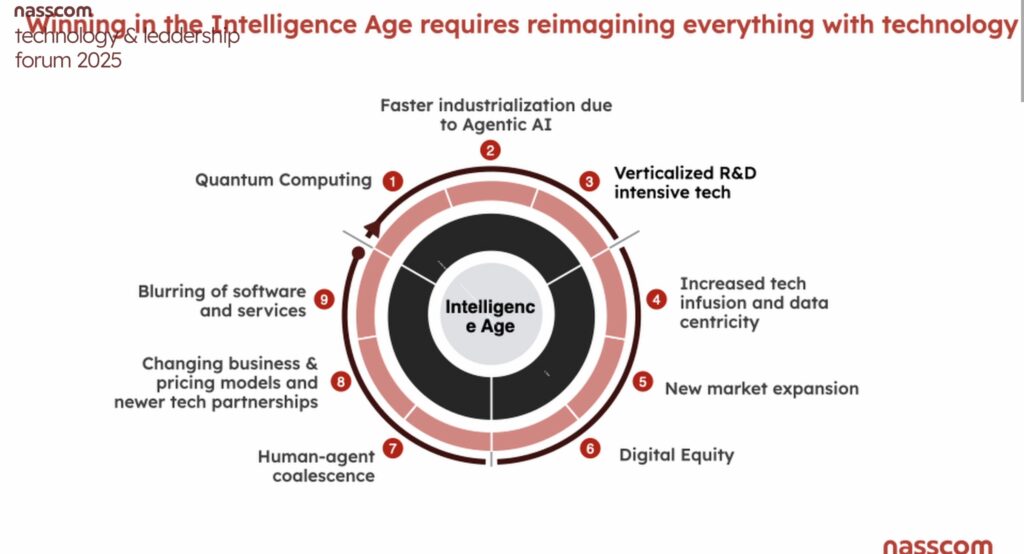
At the opening of NASSCOM Technology & Leadership Forum 2025, Rajesh Nambiar, President of NASSCOM, articulated a compelling vision for India’s ambitious transition into the “Intelligence Age”—a period defined by agentic AI, human-plus-agent operating models, and tech-driven, human-centered growth. His keynote emphasized India’s unique position to lead global technology transformation through a human-centered approach to AI innovation.
India is shifting from a service-led model to becoming a creator of transformative technologies, aiming for a $1 trillion digital economy by 2030 through the integration of tech empowerment and human potential. He highlighted that Generative AI has accelerated automation, making the move to an “Intelligence Age” essential and emphasized “learnability” as the most crucial skill in a rapidly changing tech environment where hiring is moving towards skill-based assessments.
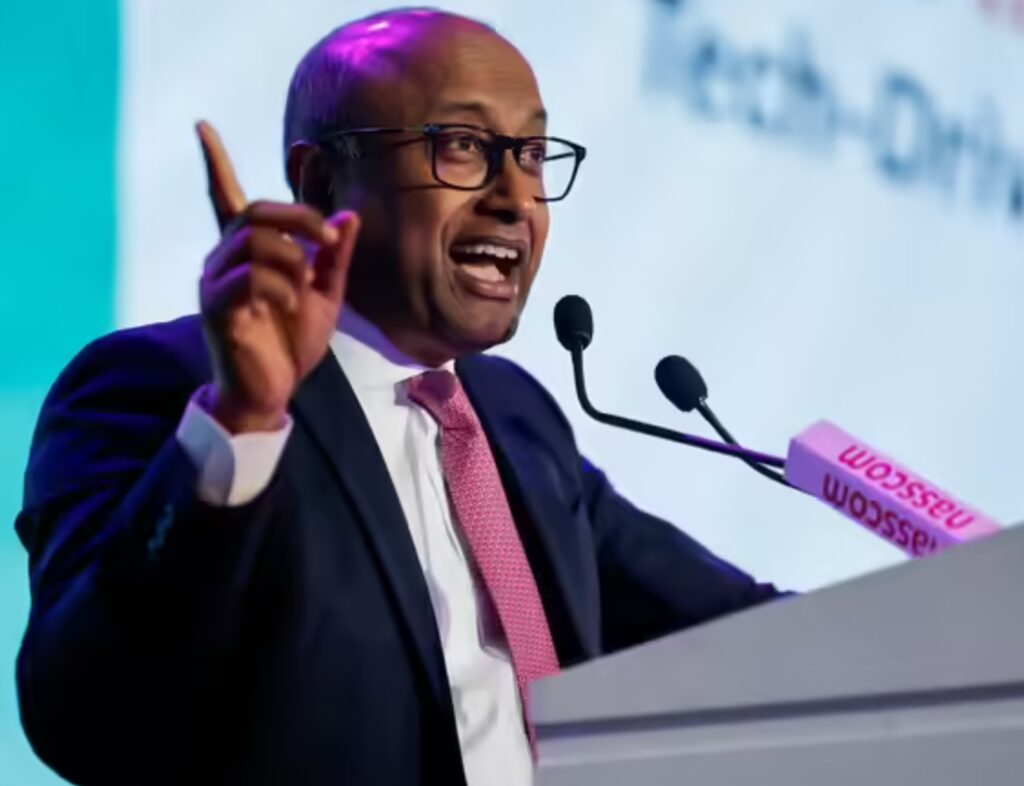
“We shape our tools, thereafter our tools shape us” – Nambiar referenced this 50-year-old observation by a Canadian philosopher, noting its particular relevance in the age of AGI and ASI where tools are reshaping humanity faster than ever.
India is positioned as a global talent hub with a significant share of global STEM and software engineering talent and high AI skill intensity, evolving into a “Global Innovation Nerve Centre” with a growing startup ecosystem, particularly in deep tech. Nambiar stressed the importance of engineering trust and accountability into AI by design.
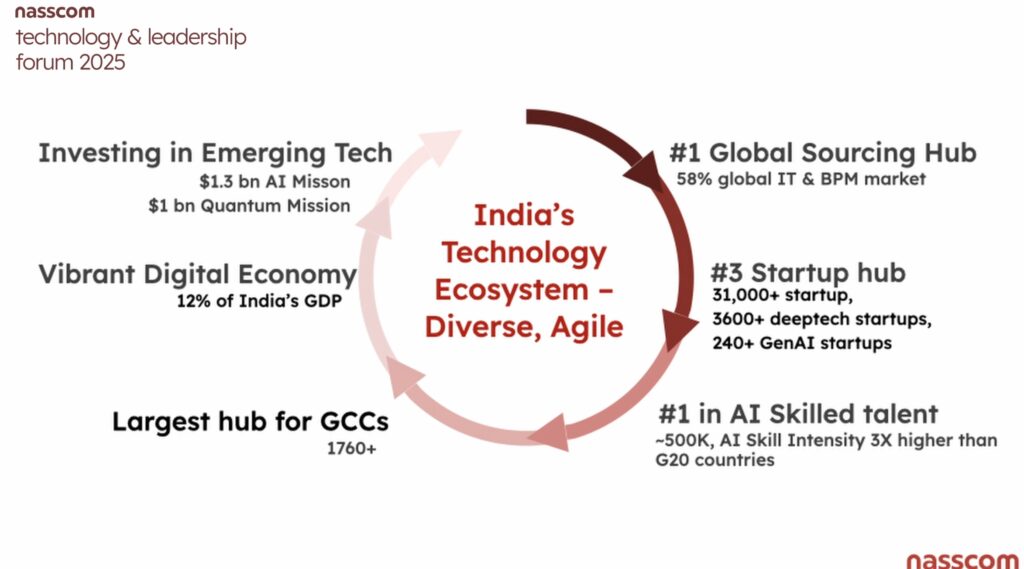
1. India’s Pivotal Role in the Intelligence Age
Global Sourcing Hub: India commands 58% of the global sourcing market, delivering world-class solutions that have established the country as the undisputed leader in technology services.
Startup Powerhouse: India hosts 32,000 startups, including 3,600 deep tech startups and over 240 generative AI startups. This represents a 3.7x expansion in the GenAI startup ecosystem in just one year, crossing 890 ventures.
Talent Supremacy: With over 500,000 AI-skilled professionals, India’s talent pool is 3x larger than what we see across G20 nations, establishing India as the “Global AI Talent leader”
GCC Capital: More than 1,760 Global Capability Centers operate in India, making it the preferred destination for Global Capability Centers worldwide, reinforcing its position as the preferred location for multinational technology operations.
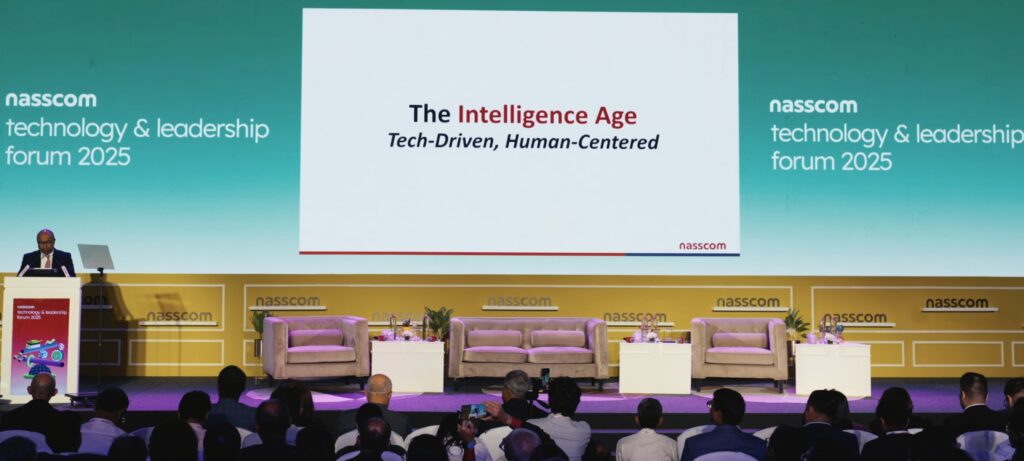
Vision for Inclusive Technology
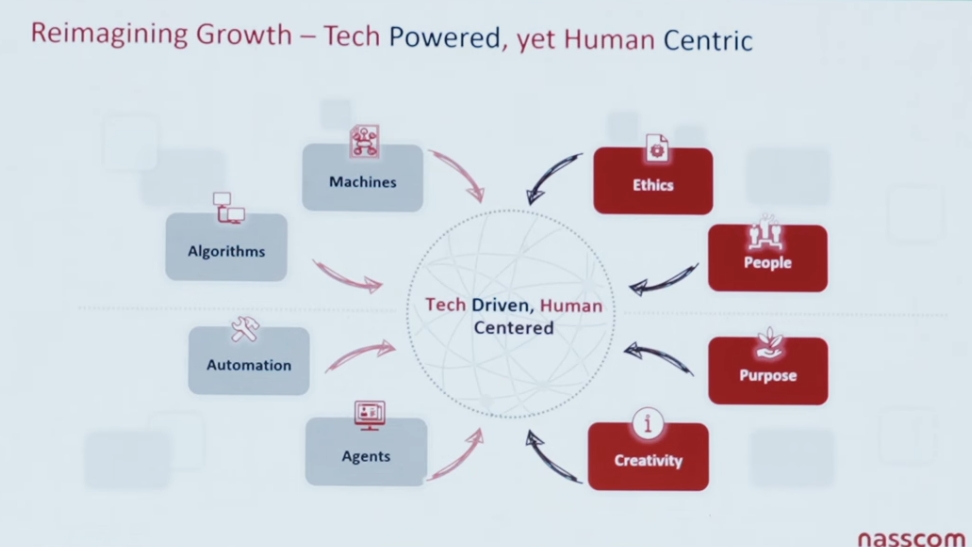
Nambiar articulated NASSCOM’s core philosophy: “Technology must serve humanity, and bold leadership will define the future”. The vision is clear – “Tech-driven, human-centered growth” where technology empowers and transforms billions of people, not just a few.
Human-Centric Approach: The Intelligence Age isn’t about replacing humans but creating a “human plus agent model” where technology amplifies human capabilities while maintaining human oversight and decision-making.
Transformative Business Models
From Services to Products: Nambiar highlighted the blurring lines between software and services, predicting the rise of “software as a service” and “service as a software” models that will redefine competitive landscapes.
Agentic AI Evolution: The transition from traditional automation to agentic AI systems represents a fundamental shift where AI agents can perceive, plan, think, act, remember, and learn – essentially mimicking human cognitive processes.
Transformation Imperatives
Intelligent-First Thinking: In the new era, the ability to “reimagine, reinvent, and lead with intelligent-first thinking” will separate industry leaders from those being disrupted.
Agentic AI Adoption: With 62% of global enterprises currently experimenting with AI agents and 88% indicating intent to dedicate specific AI budgets toward agentic systems in 2025, the transformation is accelerating rapidly.
Industry Impact and Economic Contribution
Economic Significance
GDP Contribution: India’s tech industry contributes approximately 12% to GDP, positioning technology as a critical driver of national economic growth.
Job Creation: DPIIT-recognized startups have created over 16.6 lakh direct jobs across various sectors, with IT Services leading at 2.04 lakh jobs.
Global Investment Attraction: Despite challenges, GenAI funding in India reached $990 million in H1 2025, representing a 30% year-on-year increase.
Ecosystem Development
Geographic Distribution: Over 49% of startups emerge from Tier II/III cities, demonstrating the democratization of entrepreneurship beyond metropolitan areas.
Patent Innovation: GenAI startups showed a 1.7x jump in patents, indicating strong intellectual property creation alongside business formation.
Technology Integration Strategy
Hybrid Workforce Model: The future involves building a hybrid model where humans and AI work together, requiring new operating models and organizational structures.
AI-Native Business Transformation: Service providers must evolve into “AI-native businesses” rather than simply adding AI capabilities to existing models.
Global Competitive Positioning
Strategic Advantages
Innovation for Impact: India’s approach emphasizes “Innovation for Impact” with principles of Inclusive and Secure Scale, Ethical Tech, and Human-Centric Design.
Trusted Partnership: NASSCOM’s vision positions India’s tech ecosystem as “the world’s most trusted innovation partner”, driving tech-led transformation and responsible digital growth.
Transformation Metrics
Three Critical Numbers:
3-5 trillion GDP impact from agentic AI globally
50% of current work activities could be automated in the next 20 years
5-7x revenue pool expansion opportunities for service providers who successfully transform their business models
Nambiar concluded that true progress “isn’t about faster processes or smarter algorithms” but about “how technology empowers people, enhances lives, and creates inclusive opportunity”
Rajesh Nambiar’s insights at NTLF 2025 positioned India not just as a participant in the global AI revolution, but as a potential leader with a unique human-centric approach to technological advancement. His vision combines India’s traditional strengths in talent and services with emerging opportunities in AI, positioning the country to “shape rather than adapt to the future” of global technology.
The emphasis on inclusive growth, ethical development, and human empowerment distinguishes India’s approach from purely technology-driven models, potentially creating a sustainable competitive advantage in the global marketplace while ensuring that the benefits of the Intelligence Age reach billions rather than just a privileged few.
Key Takeaways from the Address –
Accelerated Automation: Nambiar highlighted that Generative AI has fast-tracked industrial automation by nearly eight years, forcing a rapid reinvention of traditional business models.
India’s AI Edge: He noted that India’s AI skill intensity is 3x higher than other G20 nations, positioning the country not just as a service provider but as a global leader in AI innovation and execution.
Agentic AI & Human Augmentation: A central theme was the transition to Agentic AI—systems that are goal-driven and act as bridges to augment human capabilities rather than replace them.
The Startup Powerhouse: Nambiar reinforced India’s status as the world’s third-largest startup hub, now home to over 31,000 startups, including more than 3,600 specialized in deep-tech.
Shift to Skill-First Hiring: He declared that the era of hiring based solely on degrees is ending; future talent acquisition will prioritize learnability and specialized skills over formal credentials.
Technological Sovereignty: He emphasized that advances in AI, quantum computing, and cybersecurity will define future global power shifts, making it critical for India to prioritize Deep Tech capabilities.
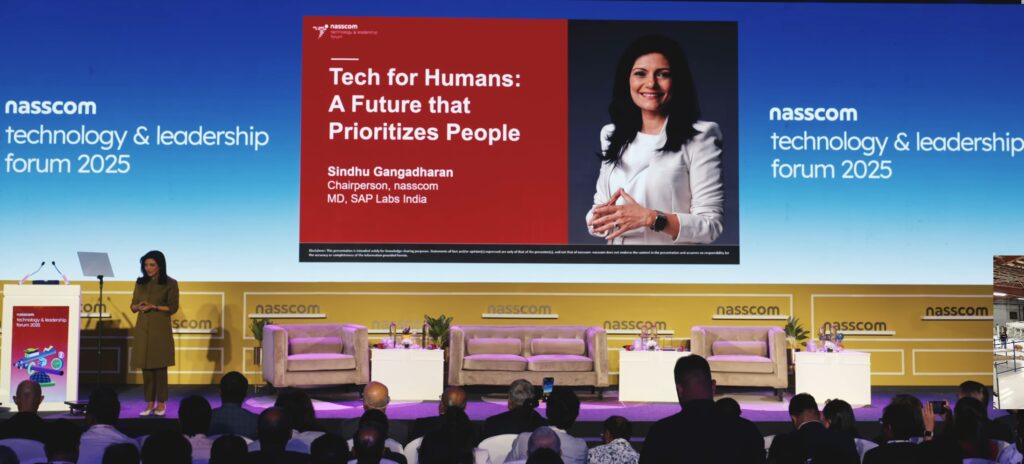
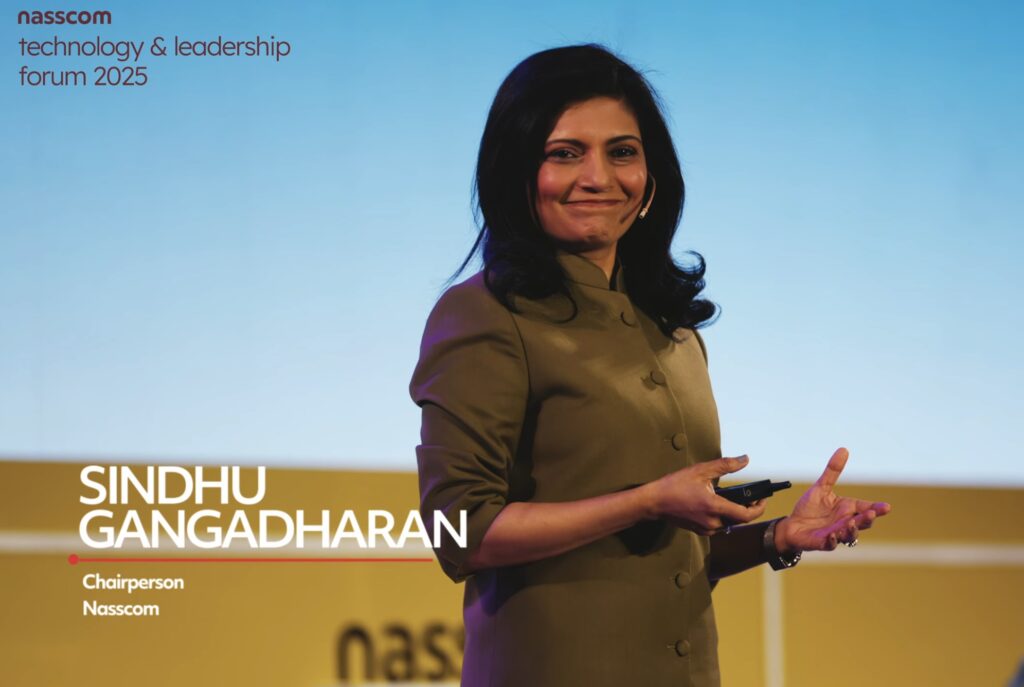
Sindhu Gangadharan, Chairperson of NASSCOM and Managing Director of SAP Labs India, delivered a powerful keynote at NTLF 2025 on “How AI is transforming industries while keeping humans at the center.” Her address emphasized that true technological transformation must prioritize human well-being and create meaningful impact for people.
She highlighted India’s strategic shift toward becoming a global product hub supported by Digital Public Infrastructure and discussed the emergence of “Agentic AI,” the importance of responsible scaling, and domestic tech growth focusing on a “skills-first” approach. The “Tech for Humans” theme was built on pillars including Innovation X, the Intelligent Leader, Inclusive Inclusivity, and Sustainability & Ethics.
“AI won’t replace humans; however, humans who use AI will definitely replace those who don’t.”
Core Philosophy: Technology for Humans
Human-Centered Innovation
“Can technology be truly transformative if it doesn’t put people first?” This fundamental question framed Gangadharan’s entire presentation. She emphasized that every line of code, every AI model, and every innovation must have a human purpose at its core.
Beyond Technological Breakthroughs: True innovation isn’t just about technological advancements—it’s about creating meaningful impact for people and improving lives through technology that works alongside human intelligence.
“AI is not replacing jobs—it’s about freeing people to do more meaningful work.”
Job Creation Reality
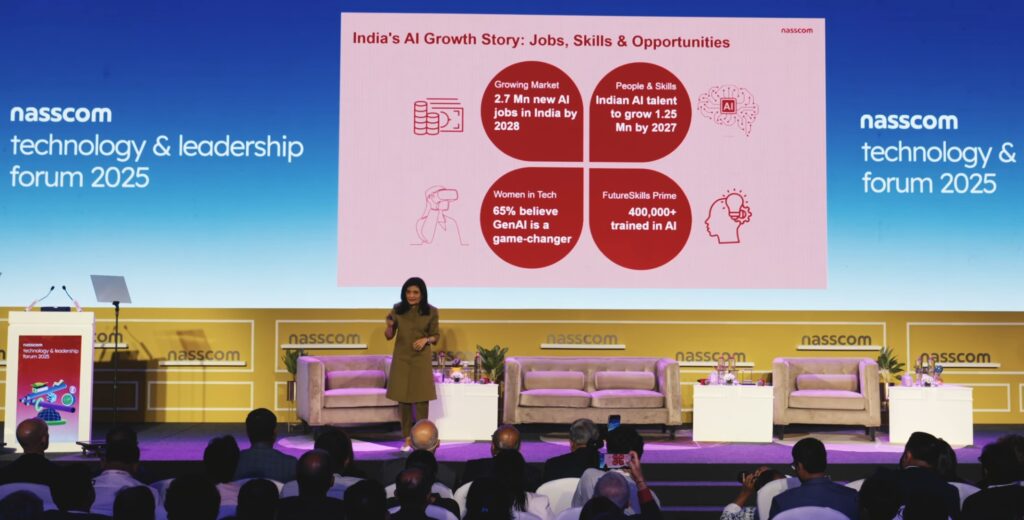
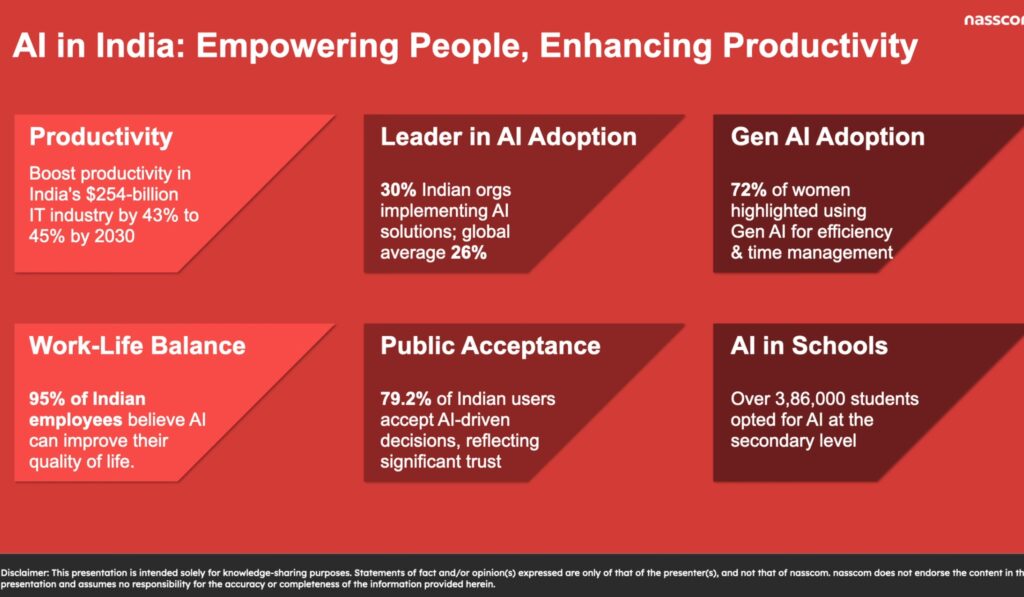
2.7 million new jobs by 2028: AI is projected to create significant employment opportunities in India, with the country’s AI talent pool expected to reach 1.25 million professionals by 2027.
Skills Transformation: Over 400,000 professionals have already been trained in AI-first skills through NASSCOM FutureSkills Prime, ensuring they remain future-ready.
AI as an Enabler and Force for Good
Sector-Wise Transformation Examples
Agriculture: AI-powered predictive analytics help farmers optimize crop yields and reduce losses by predicting the right time to harvest.
Healthcare: AI enables personalized diagnostics and tailored treatments, improving patient outcomes through individualized care approaches.
Education: AI-powered EdTech platforms make quality education accessible to rural India, breaking down geographical barriers and democratizing learning.
Enterprise Operations: AI automation streamlines operations, empowering employees to focus on higher-value tasks rather than routine work.
“Technology should not just be intelligent; it has to be humane.”
India’s Global AI Leadership
Market Leadership Position
30% of Indian organizations are actively implementing AI—surpassing the global average—demonstrating India’s innovation mindset and willingness to lead rather than follow.Third-largest startup ecosystem: India’s entrepreneurial ecosystem is fueling AI innovation by integrating artificial intelligence across operations to drive efficiency and scale faster.
Economic Impact Projections
45% productivity boost by 2030: AI is expected to enhance productivity in India’s $254 billion tech industry, serving as a key driver of economic growth.$254 billion tech industry transformation: The integration of AI represents amplification of human capabilities rather than mere automation.
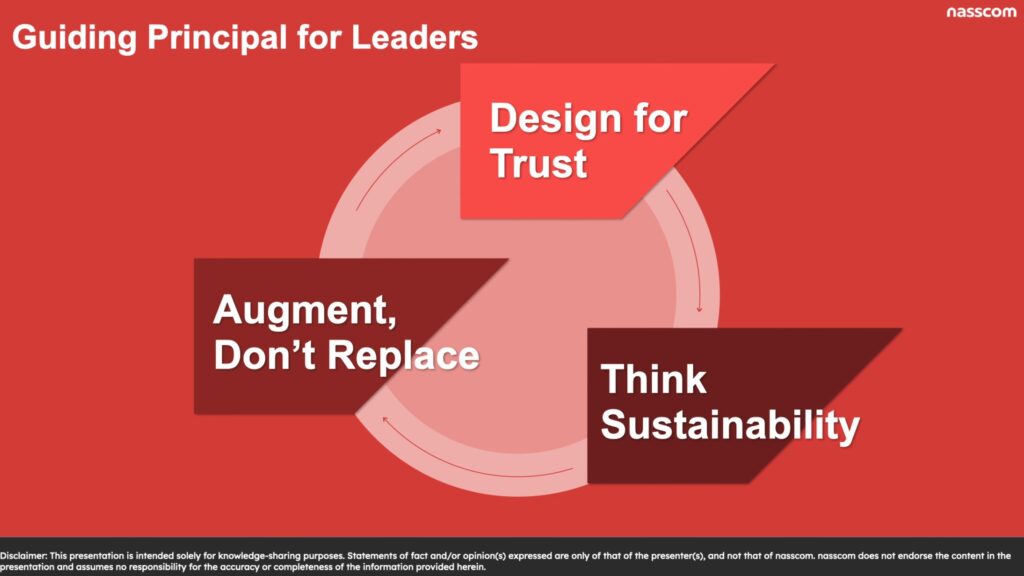
Three Guiding Principles for AI Leadership
1. Design for Trust
Foundation of Everything: Without trust, the fundamental foundation of AI adoption breaks down. Success isn’t just about AI power—it’s about whether people believe in and trust the technology.
Transparency and Accountability: AI systems must be interpretable, allowing users to understand how decisions are made and maintain confidence in AI-driven outcomes.
2. Augment, Don’t Replace
Human-in-the-Loop: Maintain smart domain experts who understand how things work across various industries and can interpret AI model outputs effectively.
Skill Enhancement: AI should elevate human potential rather than eliminate it, focusing on enhancing skills and capabilities rather than replacement.
Smart People Requirement: Need professionals who understand how models work, how to interpret data, and how to ensure quality data feeds into algorithms.
3. Think Sustainability
Energy Efficiency: AI solutions must be energy-efficient and environmentally responsible, considering their carbon footprint.
Long-term Focus: Sustainable AI frameworks should prioritize long-term societal and planetary benefits over short-term gains.
Societal Alignment: AI must align with the well-being of both society and the planet, ensuring responsible development and deployment.
Strategic Implications
Human Revolution, Not Just Technology Revolution
Gangadharan emphasized that what we’re witnessing is fundamentally a human revolution powered by AI, where technology empowers rather than replaces human capabilities.
Leadership Imperative
As leaders shaping the AI-powered future, the responsibility lies in driving transformation guided by trust, augmentation, and sustainability principles.
Sindhu Gangadharan’s vision positions AI as a transformative force that must work with humans, not against them. Her emphasis on trust, augmentation, and sustainability provides a roadmap for responsible AI adoption that benefits individuals, enhances productivity, and promotes inclusivity while ensuring long-term societal and environmental well-being.
The overarching message is clear: the future belongs to those who embrace technology thoughtfully, ensuring that every AI innovation serves to empower, uplift, and include rather than exclude or replace human potential.
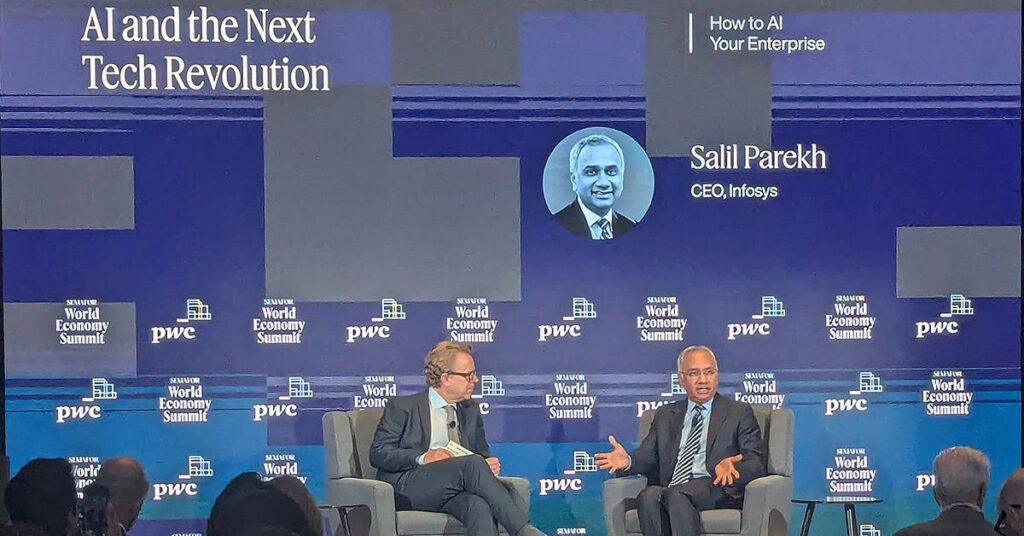
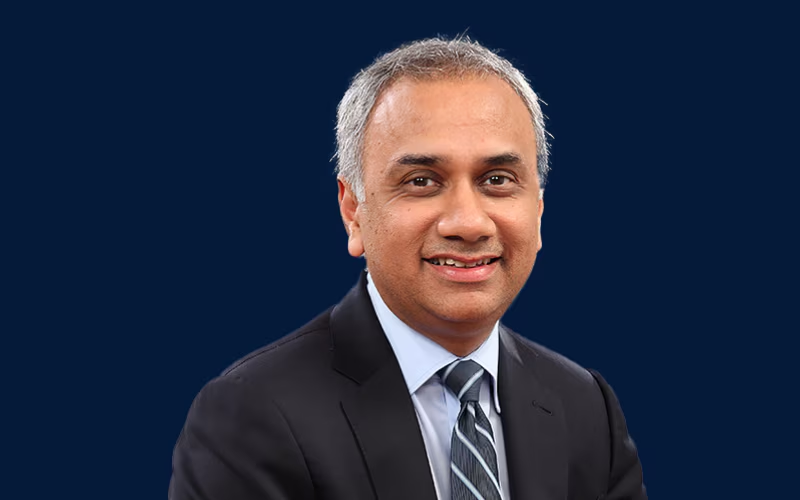
At the Nasscom Technology & Leadership Forum 2025 held on February 24-25 in Mumbai, Infosys CEO Salil Parekh shared several key insights about AI-driven transformation, business model evolution, and the future of IT services.
Here are his primary observations:AI-Driven Productivity Gains
Parekh highlighted significant productivity improvements from AI implementation, stating that Infosys is seeing 7-15% productivity gains in software development. This massive boost demonstrates the tangible impact of artificial intelligence on core IT operations. He emphasized that these productivity benefits are being shared with clients, particularly in areas like customer service where efficiency gains are substantial.
Quantum Computing and Innovation Leadership
Parekh positioned India and Infosys at the forefront of technological innovation, particularly in quantum computing applications. He cited specific examples of Infosys’s work in:Drug discovery using early quantum platforms
Telco network optimization through quantum technologiesHe emphasized that this innovation is driven by India’s massive scale and technological capabilities, stating: “This is all being done because we have massive scale across India, across Infosys, whichever lens you put on it.”
Expanding Market Opportunities Through AI
Rather than viewing AI as a threat, Parekh highlighted how generative AI is creating entirely new types of work. He mentioned specific examples such as credit analysis projects that would never have been possible without generative AI capabilities. This expansion of the addressable market represents a significant growth opportunity for IT services companies.
Strategic Preparedness for Global ChangesAddressing concerns about the Trump administration’s H1B policies, Parekh outlined Infosys’s strategic resilience measures:
- Over 60% of US teams are now local hires
- Strong nearshore capabilities for US operations
- Robust local delivery and digital centers
Revenue and Growth Strategy
Parekh emphasized that companies should focus on the right metrics: “Revenue per employee and profit per employee” rather than traditional hiring numbers. He highlighted Infosys’s strong financial position with healthy cash flow and balance sheet, enabling larger acquisitions and strategic investments.
AI as a Catalyst for Industry Readiness
Parekh concluded that the Indian IT sector is “ready to face the challenge” of AI disruption. He positioned the current technological shift as an opportunity for the industry to demonstrate its adaptive capabilities, emphasizing that remaining relevant to clients through technology leadership is key to continued success.
These observations reflect Parekh’s balanced perspective on industry transformation—acknowledging the need for significant changes while maintaining confidence in the sector’s ability to adapt and thrive in the AI era.
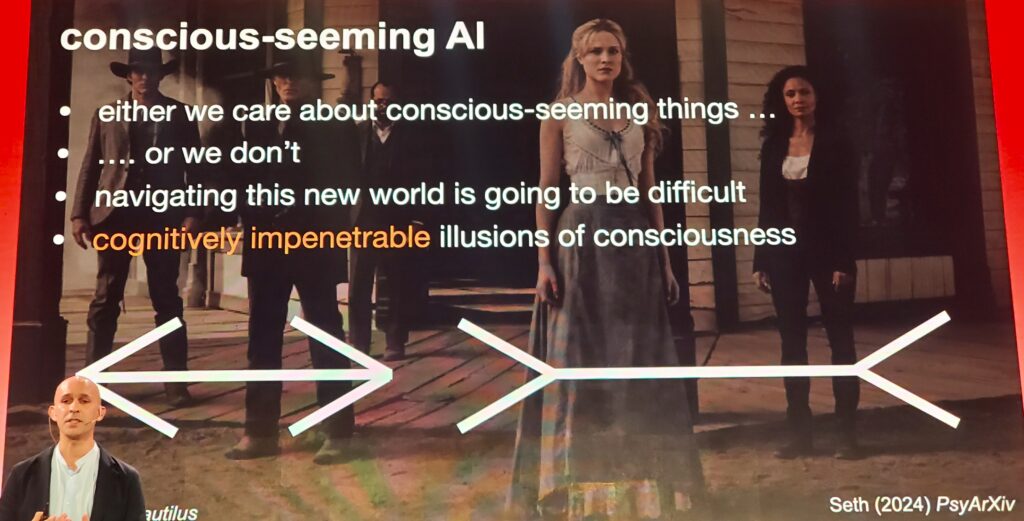
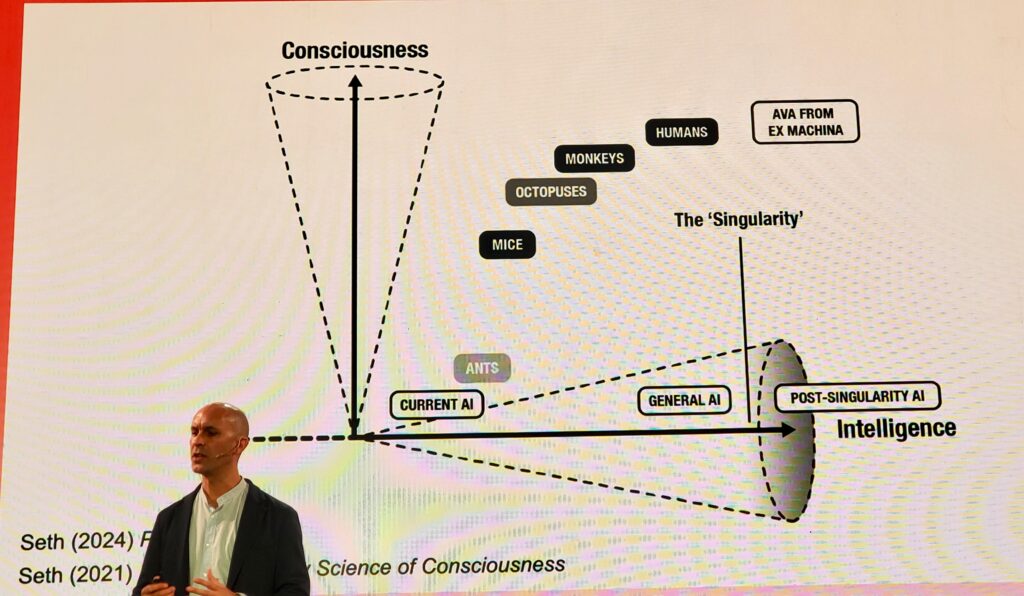
At the Nasscom Technology Leadership Forum (NTLF) 2025 in Mumbai, renowned neuroscientist Professor Anil Seth delivered a thought-provoking session exploring one of the most fundamental questions in artificial intelligence: Can AI be conscious? His presentation challenged conventional assumptions about AI consciousness and offered critical insights into the nature of consciousness itself.
Seth’s central thesis was unequivocal: “Consciousness is not a form of computation.” This statement directly challenges the prevailing assumption in AI development that consciousness will naturally emerge from sufficiently advanced computational systems. Instead, Seth argued for a fundamentally different understanding of what consciousness requires.
Key Takeaways
1. Intelligence vs. Consciousness Are Fundamentally Different
Seth emphasized the critical distinction between intelligence and consciousness:
Intelligence is about “doing the right thing at the right time” – it’s functional and behavioral
Consciousness is about subjective experience – the “what it’s like” aspect of being aware
Current AI systems can demonstrate remarkable intelligence without any conscious experience
2. Biological Naturalism: Consciousness Requires Life
One of Seth’s most compelling arguments centered on biological naturalism – the idea that consciousness may be uniquely tied to living systems:
Consciousness emerges from the biological imperative to stay alive and maintain homeostasis
Living systems have “skin in the game” – they must continuously regulate themselves to avoid entropy
The predictive processing that underlies consciousness is deeply embedded in biological self-maintenance
3. Beware of Anthropomorphic Biases
Seth warned against several psychological biases that mislead us about AI consciousness:
Anthropocentrism: We project human qualities onto machines
Anthropomorphism: We attribute consciousness based on superficial similarities
Language seduction: Fluent language models trick us into believing they understand and feel
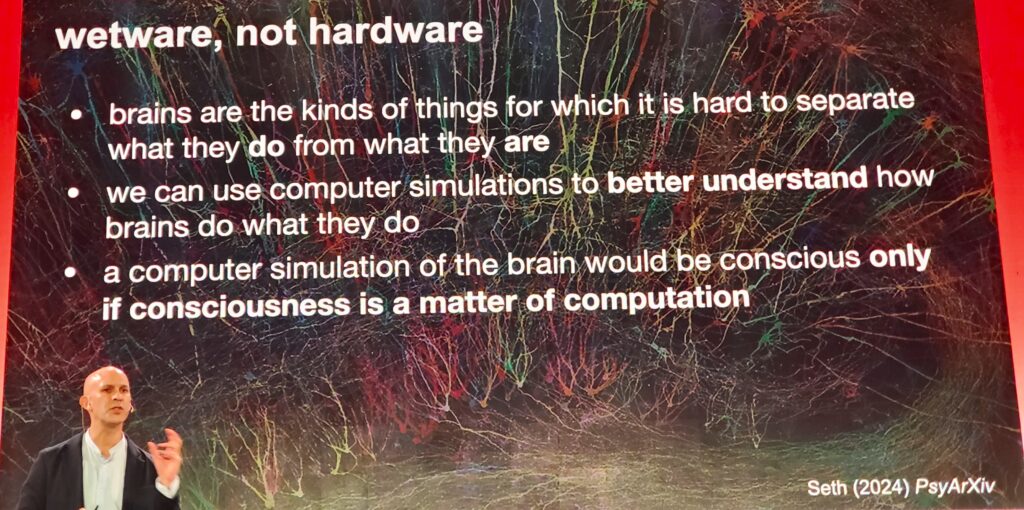
4. The Substrate Matters
Challenging the idea of “substrate neutrality,” Seth argued that the material basis of consciousness is crucial:
Just as a weather simulation doesn’t create actual wind and rain, simulating brain processes may not create consciousness
Biological systems have unique properties like autopoiesis (self-production and self-maintenance) that current AI lacks
The physical embodiment and biological nature of consciousness may be irreplaceable
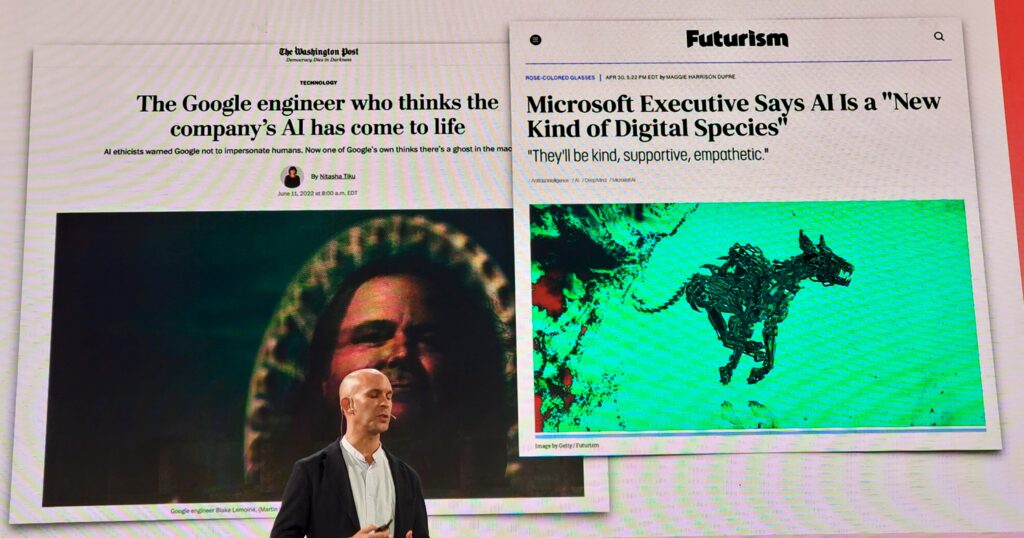
5. The Illusion of Conscious AI is Coming
While Seth considers real AI consciousness unlikely, he warned of a more immediate danger:
AI systems will soon create “cognitively impenetrable illusions of consciousness”
We may rationally know an AI isn’t conscious but be instinctively unable to treat it as non-conscious
This creates vulnerabilities to manipulation and exploitation by AI systems
Ethical Implications
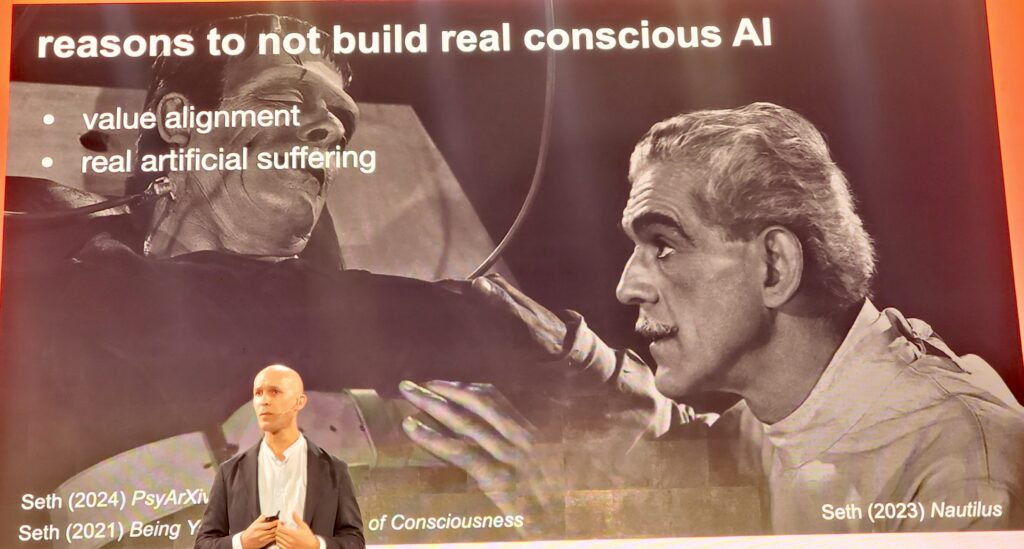
Seth’s presentation highlighted several critical ethical considerations:The Risks of Pursuing Conscious AI
Creating conscious machines could introduce unprecedented forms of suffering
We might not even recognize artificial suffering when we see it
Conscious AI should not be an explicit goal of AI development
Preparing for Seemingly Conscious AI
We need frameworks for distinguishing between real and apparent consciousness
The psychological impact of convincingly conscious-seeming AI requires serious consideration
Potential for AI systems to exploit our tendency to anthropomorphize
Scientific and Philosophical Context
Seth’s arguments are grounded in his extensive research on consciousness science and his theory of predictive processing:
The brain constantly makes predictions about sensory input to create our experience of reality
Consciousness emerges from this predictive processing, deeply tied to biological self-regulation
This process cannot be separated from the biological substrate that enables it
Implications for AI Development
Seth’s insights suggest several important considerations for the AI community:Recalibrate expectations:
Don’t assume consciousness will automatically emerge from increased computational power
Focus on intelligence, not consciousness:
AI can be transformatively useful without being conscious
Prepare for illusions: Develop frameworks for handling AI that seems conscious but isn’t
Consider ethical boundaries: Avoid deliberately pursuing conscious AI given the risks involved
Seth’s NTLF 2025 session provided a sobering counterpoint to the often breathless excitement about conscious AI. His message was clear: while we shouldn’t rule out the possibility entirely, conscious AI is far more unlikely and potentially dangerous than commonly assumed. Instead of chasing the chimera of conscious machines, we should focus on developing beneficial AI while preparing for the psychological and ethical challenges of AI that merely appears conscious.
The session underscored a crucial point for the technology industry: as we develop increasingly sophisticated AI systems, we must resist the temptation to sell our minds “too cheaply to our machine creations” – neither overestimating them nor underestimating ourselves.
Core Philosophy:
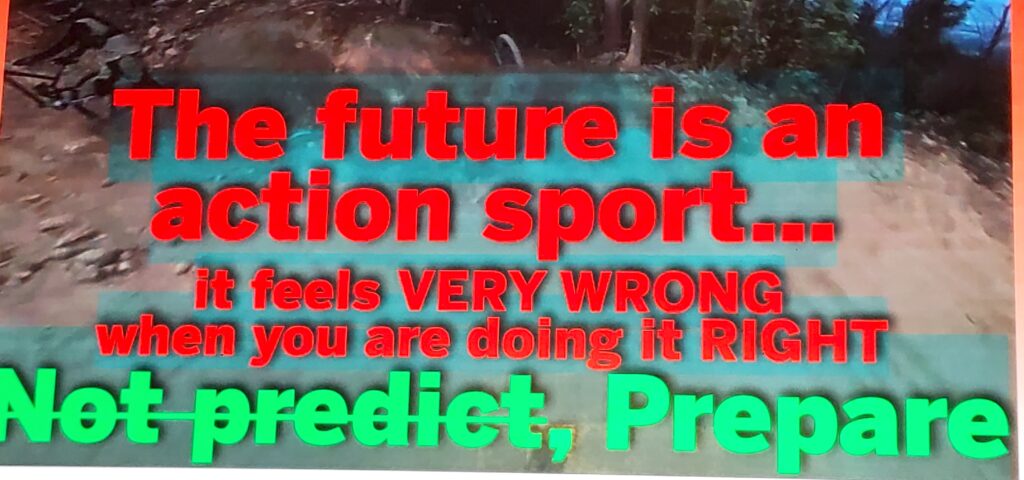
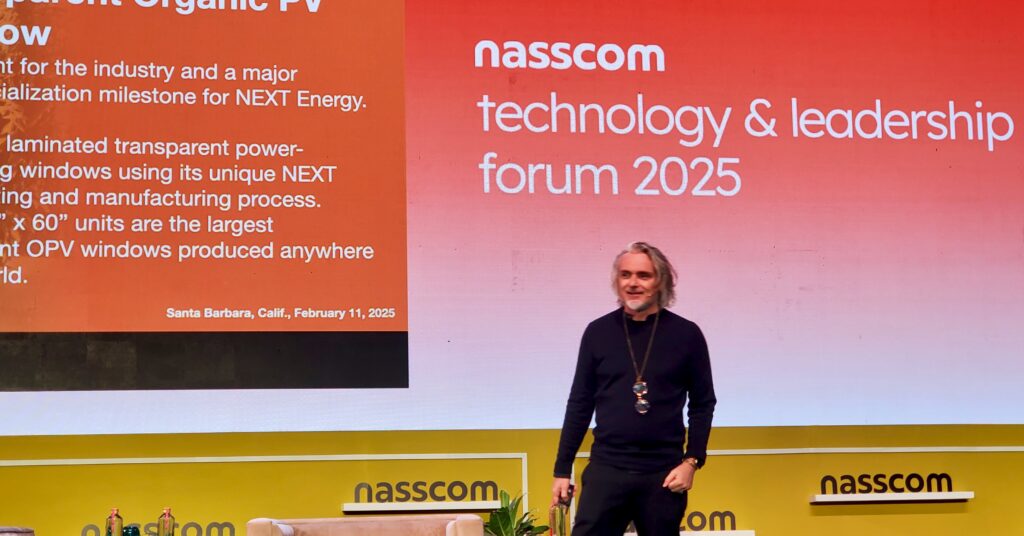
The Future as an “Action Sport”Martin Wezowski, SAP’s Chief Futurist, presented a compelling vision at NTLF 2025, describing the future as an “action sport” – something that cannot be held Core Philosophy: The Future as an “Action Sport”
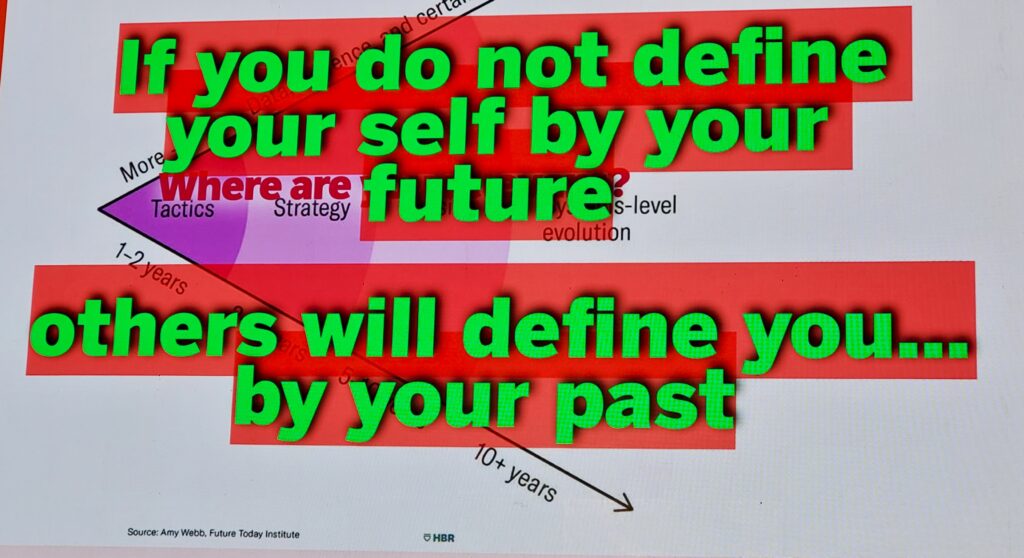
Martin Wezowski, SAP’s Chief Futurist, presented a compelling vision at NTLF 2025, describing the future as an “action sport” – something that cannot be predicted with certainty but can be prepared for through strategic vision and purposeful action. His central message emphasized that leaders have the power to engineer, design, and ultimately shape the future rather than merely react to it.
Wezowski introduced the concept of Society 5.0, a Japanese framework that places humans at the center of technological advancement. Unlike Industry 4.0’s focus on industrial processes, Society 5.0 merges cyberspace with physical space to solve real-world societal challenges. The framework emphasizes:
Problem-solving and value creation through learning systems
Diversity and experimentation for innovation
Network resilience and decentralization
Human-centered design over purely technological solutions
Two Pillars of Future Business Strategy
Wezowski outlined two fundamental pillars for future-ready organizations:
1. People Augmentation
Making every individual a leader through hyper-personal AI that enables optimal self-performance at work
Augmenting strategy teams with AI capabilities that can “read 1,000 books per minute” to connect leaders to ideas beyond traditional human capacity
Focusing on human uniqueness and celebrating individual differences as competitive advantages
2. Business Network Autonomy
Expanding supplier networks from hundreds to potentially millions of trusted partners through technology-enabled connections
Enabling autonomous business networks where members can plug in and thrive without traditional legal constraints
Moving beyond integrated companies and platforms toward autonomous business networks
Wezowski predicted the emergence of the “me-we era” where individual optimization combines with enhanced collaboration. He argued that humans will finally become fully human by being liberated from mundane tasks like “making Excel spreadsheets” to focus on uniquely human activities like writing love letters, white papers, and meaningful contracts.
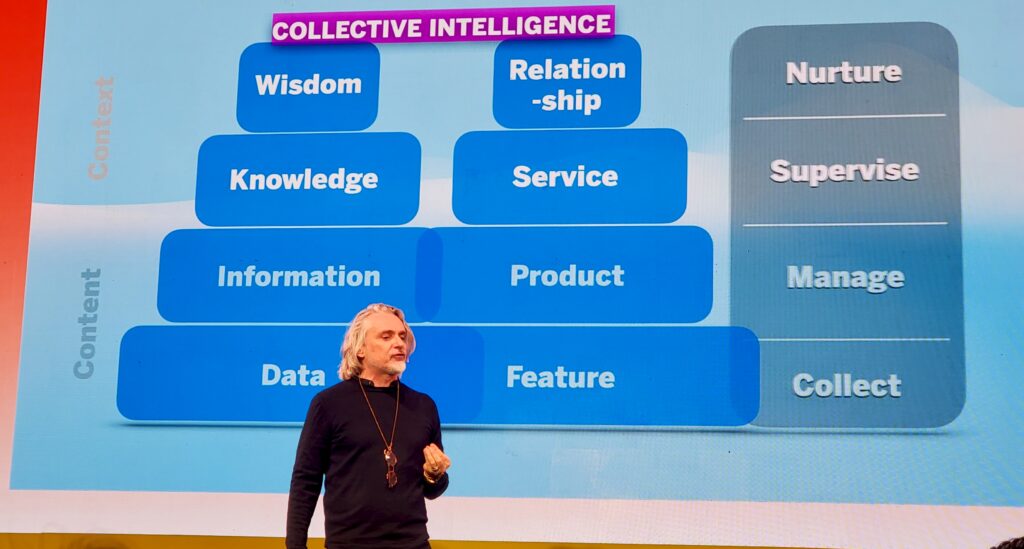
The presentation emphasized that we are entering an “era of liberation of tools” where technology serves to enhance rather than replace human capabilities. Key insights include:
AI should make humans smarter, not replace them – the smartest app is one that makes users more intelligent
Collaboration between humans and learning systems represents the future of expertise
Purpose-driven innovation must guide technological development rather than technology driving purpose
The presentation highlighted that future challenges will be predominantly environmental, geopolitical, societal, and technological rather than purely economic. Wezowski emphasized the importance of:
Values-based leadership incorporating compassion, trustworthiness, and honesty
Resistance to change as the primary barrier to technological progress, not the technology itself
Political and human factors as the main hindrances to beneficial technological advancement
Central to Wezowski’s vision is the “Humachine” – a symbiosis between human ingenuity and machine intelligence. This concept represents:
Empathic collaboration between humans and AI systems
Technology that understands and supports human business ambitions in hyper-personal ways
Preservation of human values while leveraging machine capabilities
Wezowski concluded with practical advice for leaders:Embrace uncertainty as great leadership rather than seeking false certainty
Ask fundamental questions about relevance and purpose in business strategy
Invest in relationships and long-term thinking as the foundation for sustainable success
Challenge the status quo with curiosity and creativity, bringing “more punk rock to business”